


About the Department of Physics
The Department of Physics at Shri Shankaracharya Professional University is committed to imparting quality education and promoting excellence in teaching, research, innovation, and scientific inquiry. The department strives to develop competent physicists, researchers, educators, and professionals equipped with analytical thinking, experimental skills, computational expertise, and ethical values to address contemporary scientific and technological challenges.
Aligned with the National Education Policy (NEP 2020), the department offers Undergraduate, Postgraduate, and Doctoral programmes in Physics designed to provide strong theoretical foundations together with extensive laboratory training, computational methods, interdisciplinary learning, research exposure, and industry interaction.
The curriculum integrates classical and modern physics with emerging areas including Materials Science, Nanotechnology, Quantum Physics, Computational Physics, Renewable Energy, Artificial Intelligence applications in Physics, Semiconductor Physics, Photonics, and Condensed Matter Physics. Students gain practical experience through laboratory experiments, research projects, internships, industrial visits, seminars, workshops, conferences, and collaborative research activities.
Supported by experienced faculty members, ICT-enabled classrooms, well-equipped laboratories, digital learning resources, and an active research ecosystem, the department promotes critical thinking, innovation, scientific temperament, problem-solving ability, entrepreneurship, and lifelong learning. The department continuously encourages publication of research papers, patents, consultancy, funded projects, and interdisciplinary collaborations while contributing towards sustainable technological development and nation building.
Programme Outcomes (POs) – Bachelor of Science (Physics)
Upon successful completion of the programme, graduates will be able to:
- PO1. Demonstrate comprehensive knowledge of classical and modern physics.
- PO2. Apply mathematical methods and computational techniques to solve physical problems.
- PO3. Design, perform, and analyze laboratory experiments with accuracy.
- PO4. Utilize modern scientific instruments and software tools for data acquisition and analysis.
- PO5. Apply scientific reasoning and critical thinking to real-world problems.
- PO6. Communicate scientific ideas effectively through reports, presentations, and publications.
- PO7. Demonstrate ethical responsibility and environmental awareness.
- PO8. Work effectively in multidisciplinary teams.
Programme Outcomes (POs) – Master of Science (Physics)
On successful completion of the programme students will:
- PO1. Acquire advanced knowledge in theoretical, experimental, and computational physics.
- PO2. Analyze complex scientific problems using mathematical and computational methods.
- PO3. Conduct independent scientific research.
- PO4. Develop advanced laboratory and instrumentation skills.
- PO5. Publish research findings in quality journals.
- PO6. Apply modern computational techniques including simulation and modelling.
- PO7. Demonstrate leadership in research and innovation.
- PO8. Contribute effectively to academia, research organizations, government laboratories, and industries.
Programme Outcomes (POs) – Ph.D. in Physics
Upon successful completion, research scholars will be able to:
- PO1. Conduct original and high-quality scientific research.
- PO2. Develop innovative solutions to complex scientific problems.
- PO3. Publish research in reputed international journals.
- PO4. Present research at national and international conferences.
- PO5. Secure funded research projects and consultancy.
- PO6. Demonstrate academic leadership and research ethics.
- PO7. Contribute towards technological innovation and sustainable development.
- PO8. Mentor future researchers and contribute to scientific advancement.
Programme Highlights
- Curriculum aligned with NEP 2020
- Outcome-Based Education (OBE)
- Choice Based Credit System (CBCS)
- Academic Bank of Credits (ABC)
- Skill Enhancement Courses
- Research-based Learning
- Computational Physics
- Modern Experimental Physics
- Internship & Project Work
- Industry Interaction
- Research Publications
- ICT-enabled Teaching
- Value Added Courses
- Multidisciplinary Learning
Vision
"To be a centre of excellence in Physics education and research by nurturing scientifically competent professionals, innovative researchers, ethical academicians, and socially responsible citizens through quality education, cutting-edge research, technological innovation, industry collaboration, and community engagement for sustainable national and global development."
Mission
- M1-To provide quality, learner-centric Physics education aligned with NEP 2020 through innovative teaching-learning methodologies.
- M2-To strengthen conceptual understanding, analytical thinking, computational skills, and experimental competence among students
- M3-To promote interdisciplinary research, innovation, consultancy, and collaborations with academic institutions, research laboratories, and industries
- M4-To develop professional ethics, leadership qualities, entrepreneurship, scientific temperament, and lifelong learning
- M5-To contribute towards societal development through scientific awareness, sustainable technologies, outreach activities, and community engagement.
Programmes Offered
|
Programme |
Duration |
Eligibility |
Degree Awarded |
|
B.Sc. |
3/4 Years (6/8 Semesters) |
10+2 with Physics |
B.Sc. / B.Sc. (Hons.) / B.Sc. (Hons. with Research) |
|
M.Sc. (Physics) |
2 Years (4 Semesters) |
B.Sc. Physics or equivalent |
M.Sc. |
|
Ph.D. Physics |
As per UGC Regulations |
Master's Degree in Physics |
Ph.D. |
Facilities
Laboratories & Facilities
The Department of Physics provides state-of-the-art laboratories and academic infrastructure to support quality teaching and research.
Facilities include:
- Physics Laboratory
- Electronics Laboratory
- Optics Laboratory
- Modern Physics Laboratory
- Computational Physics Laboratory
- Computer Laboratory
- Research Laboratory
- Wi-Fi Enabled Campus
- Seminar Hall
- Research Instrumentation Facility
Research & Publications
The Department actively promotes interdisciplinary research in frontier areas of Physics and Materials Science. Faculty members and research scholars publish research papers in Scopus-indexed, Web of Science, SCI, SCIE, and peer-reviewed journals while participating in funded research projects, consultancy, patents, and collaborative research.
The department encourages students and scholars to participate in conferences, workshops, faculty development programmes, summer schools, and international collaborations.
Major Research Areas
- Condensed Matter Physics
- Materials Science
- Photoluminescence
- Thermoluminescence
- Rare Earth Doped Phosphors
- Computational Physics (DFT)
- Semiconductor Physics
- Crystal Growth
- Optical Materials
- Renewable Energy Materials
- Magnetic Materials
- Dielectric Materials
- Thin Films
- Quantum Mechanics
- Nuclear Physics
- Radiation Physics
- Artificial Intelligence Applications in Physics
Research Highlights
- Publications in SCI, SCIE, Scopus, and Web of Science journals
- Books and Book Chapters
- Funded Research Projects
- Patents and Innovations
- National & International Collaborations
- Ph.D. Research Guidance
- Consultancy Activities
- Conference Publications
- FDPs and Workshops
- Promotion of Research Ethics
Achievements
The Department has consistently excelled in teaching, research, innovation, and community engagement through:
- Highly qualified faculty members
- Research publications in reputed journals
- Patents and research innovations
- Sponsored research projects
- National and international conference organization
- Best paper awards
- Student university ranks
- Placement in higher education and industry
- Alumni achievements
- Community outreach programmes
Events & Activities
The Department regularly organizes:
- Physics Quiz Competition
- Data Science Learning using Python
- Model Exhibition
- Science Day Celebration
- Poster Presentation Competition
- Project Exhibition
- Industrial Visits
- Internship Programmes
- Scientific Outreach Activities
Highlights
- Student Research Projects
- Alumni Interaction
- Skill Development Programmes
- Innovation and Incubation Activities
- Scientific Outreach
- Environmental Awareness Programmes
Celebration of National Science Day, World Space Week, National Technology Day, Engineers' Day, and other scientific events
Gallery
Faculty

Dr. RAVI SHRIVASTAVA
Associate Professor, Department of Physics

Dr. SUMITA SENGUPTA
Associate Professor, Department of Physics
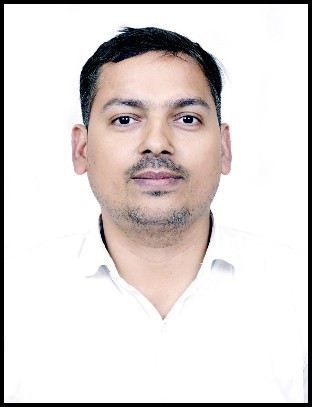
Dr. NAMAN SHUKLA
Assistant Professor, Department of Physics
 Well-qualified and experienced faculty.
 Industry tie-ups and International collaborations.
 20+ Years of Experience.
 High Standard Detailing in Academics.
 Smart Classes and Online Learning available.
